
Resources provided
Capital
- Long-term debt
Culture, connections and competence
- Impact strategy
- Investment advisory team
- Business partner input
- ESG advice and requirements
 Annual Impact Review 2025
Accessing responsible and affordable financial services remains a challenge in the developing world, especially for underserved populations such as people who live in rural areas, women and low income households. Inclusive microfinance institutions (MFIs) help to fill this gap by providing loans and other critical services that help people and businesses invest in opportunities, manage their finances and recover from shocks. Financial services also play a critical role in enabling access to other vital services such as education, energy, water and sanitation.
In our view, investing in financial inclusion is not just an attractive business opportunity for investors, it also has the potential to generate positive impact in parts of the world where it is needed most.
Trill Impact's Microfinance strategy aims to advise on private credit loans to MFIs which in turn provide financial services to individuals and micro, small, and medium-sized enterprises in emerging and frontier markets.
This strategy seeks to contribute to several SDGs, such as Access to Finance, Women’s Economic Opportunities, Clean Energy Access and Agriculture & Rural Development, while generating attractive diversified market-rate returns.

Developing countries face important and complex challenges around the SDGs, not least how to finance the investments needed to achieve them.

Many people earn their livelihoods by being self-employed or by working in microenterprises, i.e. very small businesses which may employ up to five people.

Microentrepreneurs in developing countries often fail to secure the capital they need, implying missed opportunities for growth due to lack of access to financial resources – e.g. loans or a safe place to hold savings. Microfinance can provide financial services to millions of low-income entrepreneurs and households, primarily in developing countries.

It can be harder for women around the world to access various services through mainstream institutions and higher barriers to formal employment and economic opportunities. Microfinance can target women entrepreneurs specifically and provide them tailored products and services.

Microentrepreneurs in developing countries live in places that have frequent climate-related natural disasters paired with inadequate infrastructure and limited safety nets. Microfinance can play an important role in aiding the transition to a low-carbon economy, while also supporting microentrepreneurs' ability to adapt and build resilience to climate change.
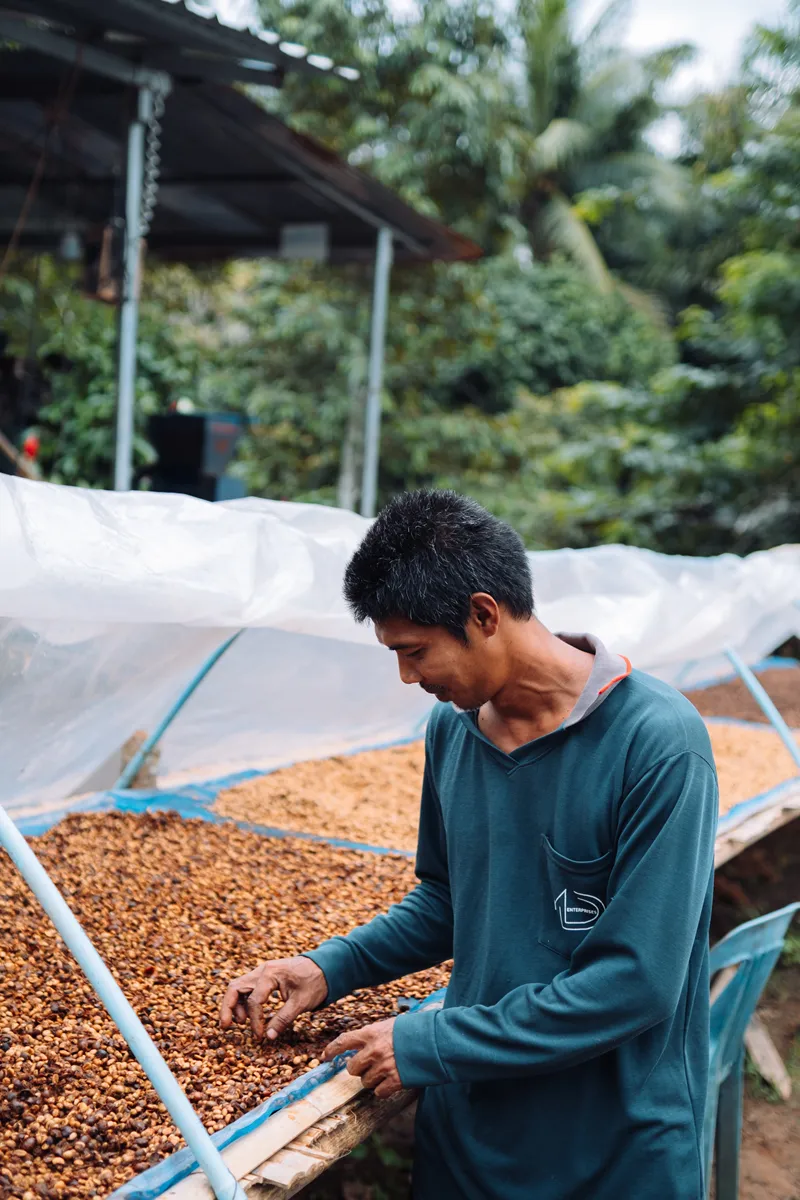
The microloan should be used for productive purposes, meaning to finance the business and ultimately generate income for the microentrepreneur.
The most common way these entrepreneurs utilize the microloan is to boost productivity, or increase output.
Since the microenterprises generally have large profit margins the microentrepreneur can usually generate significantly larger profits than the costs of the loan.
In addition to microloans, microfinance institutions may also offer other products, helping individuals with personal aspects of their lives beyond the commercial microloan, such as:
Home improvement loans for an extra room in their house to be used as a shop, educational loans, paying for e.g., school fees, school uniforms, school books, etc, or solar power loans to buy an off-grid solar power system to provide clean energy for e.g., proper lighting and mobile charging devices.
Learn more about our view on how the Theory of Change should be applied within Microfinance to test the investment's impact delivery process before providing credits:
In our view, credit investments of a Microfinance strategy should meet the five dimensions of impact:
In our view, impact measurement and management must be integrated throughout an entire investment process, and social and environmental results should be assessed and tracked across an entire investment cycle.
Company-level impact and ESG analysis should be conducted through desktop research, site visits, and discussions with MFI company management.
This robust impact measurement and management system would enable Trill Impact's Microfinance strategy to select and lend to the MFIs with high potential for impact and to manage social and environmental results.

The portfolio construction process should start from a regional perspective. Events like droughts and other weather-related events can impact a whole region or continent negatively, the aim should therefore be to avoid excessive exposure to only one geography.
Factors like how well regulated the microfinance market in each country is, how mature the microfinance institutions are and finally, pricing versus risk, must be considered. This step helps envision how an ideal portfolio should be allocated, given country risk, currency risk, and pricing.
This step includes performing the assessment of the individual microfinance institution, where an analyze of credit worthiness as well as SDG alignment should be carried out, to obtain a full picture of the financial and impact potential of the investees.
The end result should provide exposure to a diverse set of microfinance institutions, targeting attractive returns while enabling individuals to build a business, or increase their household disposable income, in parts of the world where needed the most.